Sourdough Starter – My FIRST Fermentation Project

LOVE the bubbles

Complete candor and honesty – I have historically been PETRIFIED of home fermentation projects of any kind. This includes pickling, canning, wine and beer making, kombucha, and yes, sourdough starter.

In my head I imagine making a recipe, and thereafter everyone I feed my goodies to becoming awfully sick, and leaving me feeling guilty and, well, dumb.

(Sidenote – I was the recipient of a friendship bread starter in school, and I kept it alive exactly 3 days. It has not been a strength of mine historically, but here goes nothing! Hopefully 20 years + a little more knowledge will work in my favor).

As one of my new year’s resolutions I had decided to jump in, and try some easy fermentation projects. That resolution was officially completed with my recent sourdough project.

I did some research and determined that of all the possible fermentation projects out there, sourdough seemed the easiest to embark on.

Corona tip – Can’t find yeast? Make your own! While the recipe I used took advantage of a packet of yeast, there are several that don’t. You may have to wait longer, but the results are the same.

I used this recipe from Allrecipes.com. Additionally, in researching, I did find different recipes and methods tweak the gist of this a little bit, so as a novice I feel like nurturing a sourdough starter is as much an art as it is a science.

Also, when “feeding” your sourdough (why does that bring to mind images of Little Shop of Horrors?) I found recipes that encourage an even split of flour to water, some include a pinch of sugar to boost the yeast, and some have slightly more water to flour.

Whichever method you prefer, the idea is the same. You have a loose plastic or glass (never metal) container that is lightly sealed. Air needs to access it, just like eons ago when sourdough first became a thing (seriously…eons. Romans did it). You create the beginning starter, then toss a bit and feed it every day, hoping the bubbles on top continue to be happy bubbles, and don’t disappear.

You want a fresh, yeasty smell. To me, it smells like craft beer. I suppose it would smell the same as most fermentation projects. If you see a COLOR other than a white or off white (sometimes the liquid is a little to the tan side in mine), that’s a no go. Toss and start over. I’m not talking bread colors – I mean Christmas colors. If your starter has red, green, etc, tinges and complements your Christmas tree, you don’t want a piece of that. YUCK. Toss toss toss. It WILL make you sick.

I keep mine in my laundry room, which tends to stay a few degrees warmer because of my dryer. It seems to be very happy, so I plan to keep it there.

Once your starter is well-established you can keep it in the fridge if you don’t use it often. I also found some people will freeze it. Not sure how the science of it works, since to me I feel like living things would die in temperatures that cold, but I suppose yeast is different.

Today I’m off to make my first sourdough farm boule from my starter. I’ll post the results in an upcoming post. While my sandwich bread bakes in the breadmaker, I plan to hand bake my boule, because all of this breadmaking is making me miss the process.

Something about kneading my own bread is inherently relaxing to me. A close second to my morning yoga.

Have you made your own sourdough starter before? How did it turn out? Any tips for a newbie like me?

Katie

The [Edited] Easiest Sandwich Bread Recipe On The Planet

I’ve always wanted a bread maker. Even before the current events had happened, I was talking with a friend about how much I wanted one, but that the features in the ones widely available were incredibly confusing to me.

Before this month, any bread I made was with packet yeast and a loaf pan in the oven. Manual kneading (sooo fun, but sooo time consuming), and lots of babysitting. I hated buying store bread – not because I had any qualms about it tasting bad or having odd ingredients (we try to be careful, but I also try not to have too much anxiety over our food choices), but because my Dutch husband always said that when we were in Holland he could walk down the street and buy fresh out of the oven bread, and here we didn’t have any local bakeries (AND live a minimum 20 minute drive from civilization).

So, the more time I spent making bread fully by hand the more the sandwich bread became a mini-obsession. I WANTED to offer this to my husband and family, as if to say, “He he, tell me THIS isn’t fresh.” Plus, I do really like the idea of knowing what I put in my own bread, instead of hoping the ingredient list isn’t too long and I don’t miss some obscure article online about how such and such is really terrible for you, and no one knows it, but it is in our store bread (ahem, preservatives…ahem).

Anywho, I took a leap of faith last month and bought a Cuisinart Convection Breadmaker. I liked the idea of a Convection bread maker, because I had a major distrust of convection baking until very recently (as in, I completely refused to use the feature since getting my first convection equipped oven 5 years ago), and now I’m a solid convert. I still use regular bake and roast sometimes, but the balanced and faster cooking I get with convection is game changing.

The one I purchased is out of stock (isn’t everything these days?!), but if I see it online again I will post the link. For the most part, I would think that most breadmakers would do this recipe similarly.

So, I started with the basic bread recipe from the Cuisinart manual. I don’t know WHAT I did wrong, but I only had 1 good loaf from 4, and every time it would fall right during the last rise. Tears were shed. In retrospect, I think that I’m used to having warmer water due to making bread by hand, and I might have misread my liquid thermometer on the warm side.

That being said, it was difficult for me to use the manual’s recipe anyway, because it called for dehydrated milk and, while I have regular milk on hand most of the time, I rarely have dehydrated, and I didn’t feel like keeping a special stock. Again… I’m all for making my life EASY, and I try not to keep special ingredients on hand just ‘cuz.

I finally found this recipe from King Arthur Flour. The name says it all, but before you go running off to make this recipe, I’ll go through how I whiz through it with a few tweaks every morning. I always go for the larger loaf size recipe.

The first time I made this recipe, I heard my poor machine go clunk clunk clunk all the way through the kneading cycle. The bread came out great, but STIFF. Way too much flour for me.

I added 1/3 of a cup of milk, and have made two loaves since, both of which have the perfect blend of ease, firmness for sandwiches, and airiness for yum factor.

I also like that it calls for all-purpose flour, instead of bread flour, which is also something I have to special order (which I usually try to keep on hand, except when corona decides to hose up my routines…thanks for THAT). I always have way more all-purpose flour anyway, so the fact that I could use it for this recipe was great.

My current operating theory is that I was putting my liquid in too warm, because of the reasons mentioned before, and I also don’t have time to wait for my butter to get to room temperature (do I have a patience-problem? Uh, maybe), so I came up with the following method to make this recipe.

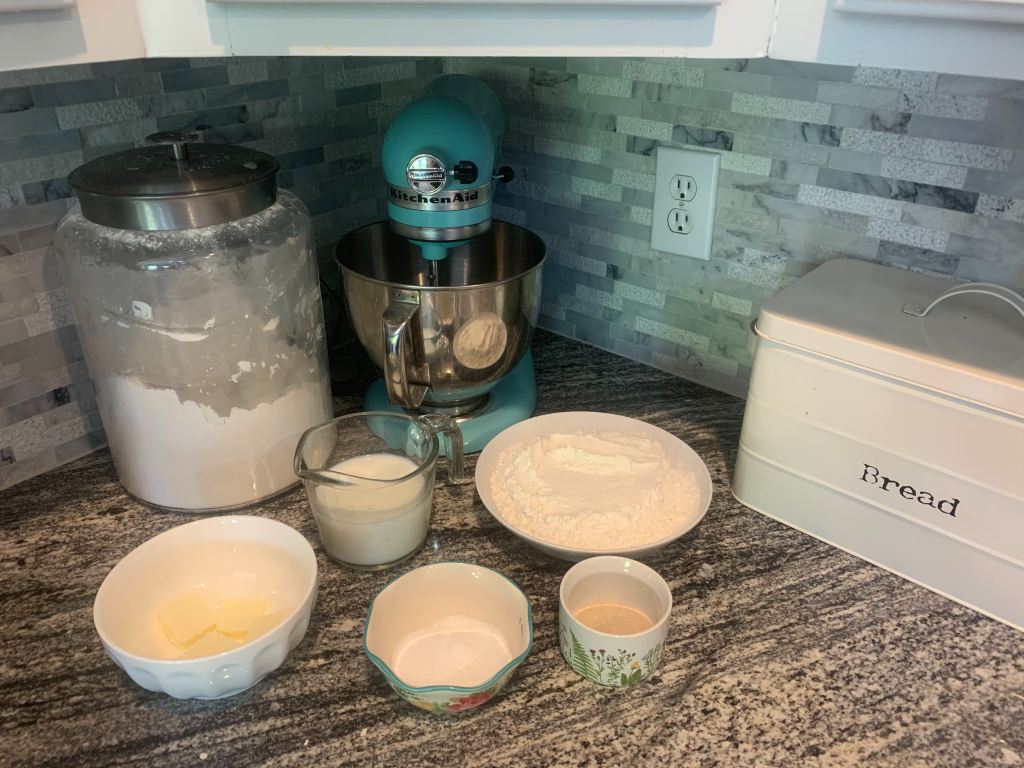
  1. I measure all of my ingredients out FIRST. I use a measuring cup, and put both liquids (lukewarm water + cold milk) into the same cup. I do not heat it up until I am ready to start the maker. Temperature is sooo important (and is a total pill to get right). Picture below. In this picture, the butter and liquids are still cold. We will fix it in a minute. The yeast is, as well, because I have a bottle of yeast and you have to keep it refrigerated, but it doesn’t seem to hurt the recipe.

2. I heat the liquids for 10 seconds in the microwave and take the temp with my kitchen thermometer (after stirring to eliminate hot patches). If you are the patient type, and want to put the butter and liquid out on the counter to warm, I applaud you. I’m not that patient. I have farm stuff to do, and chickens don’t care why their breakfast is late.

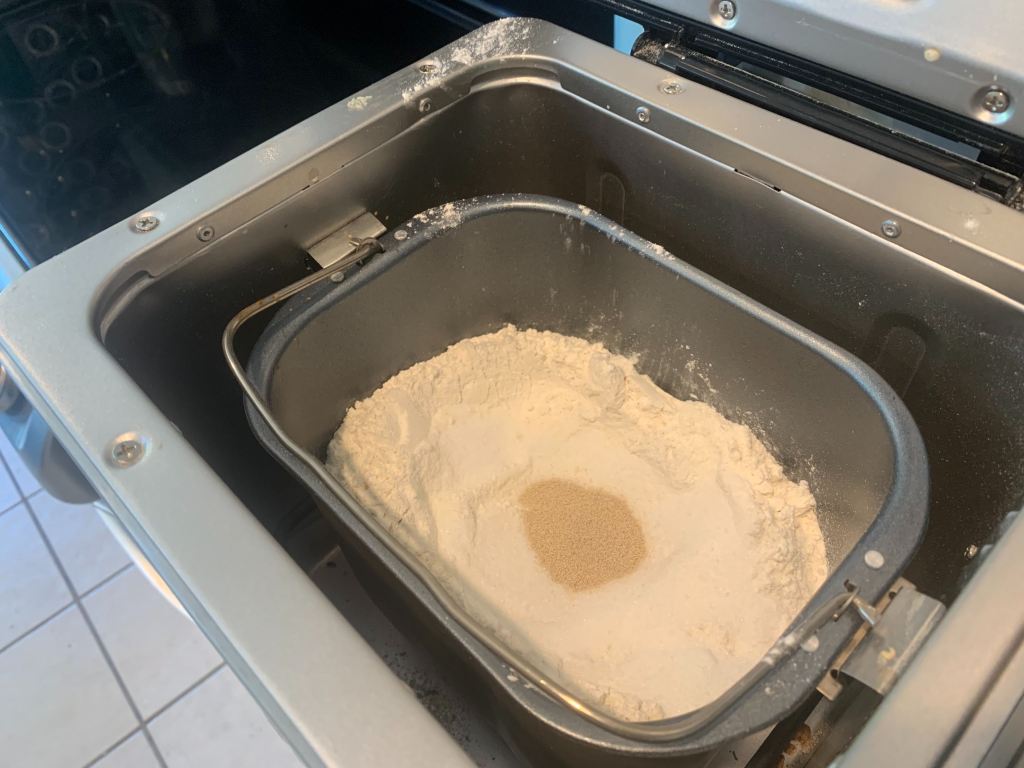
The key with my breadmaker is to use LUKEWARM liquids. Instead of 110 degrees or so, like I use when hand baking, I shoot for 80-90 degrees F. I am thinking since the maker stays so warm it works better this way. I pour my ingredients in in this order (per manufacturer guidelines): liquid, butter – 1/4 of the amount called for in each corner (also warmed for a few seconds, but not too many – 5 maybe – you don’t want it softened at all, just not freezing), flour, sugar and salt (they are both in the smaller middle bowl), and then I make a little hole in the middle, and plunk in the yeast. I tried to get a good picture below, but my kitchen lighting makes it hard not to catch a shadow. See the pretty little yeast nest?

3. I put the maker on white loaf – 1.5 lb – medium crust. Turn off the mix-ins option, hit start and walk away (as much as I like to bake, this makes me feel like I’m cheating a bit, but it is AWESOME). If I am around, I will listen for the pause beep halfway through and take out the paddle so the loaf only has a tiny hole, but quite honestly, again… doesn’t bother me. Bread is bread and bread is yum.

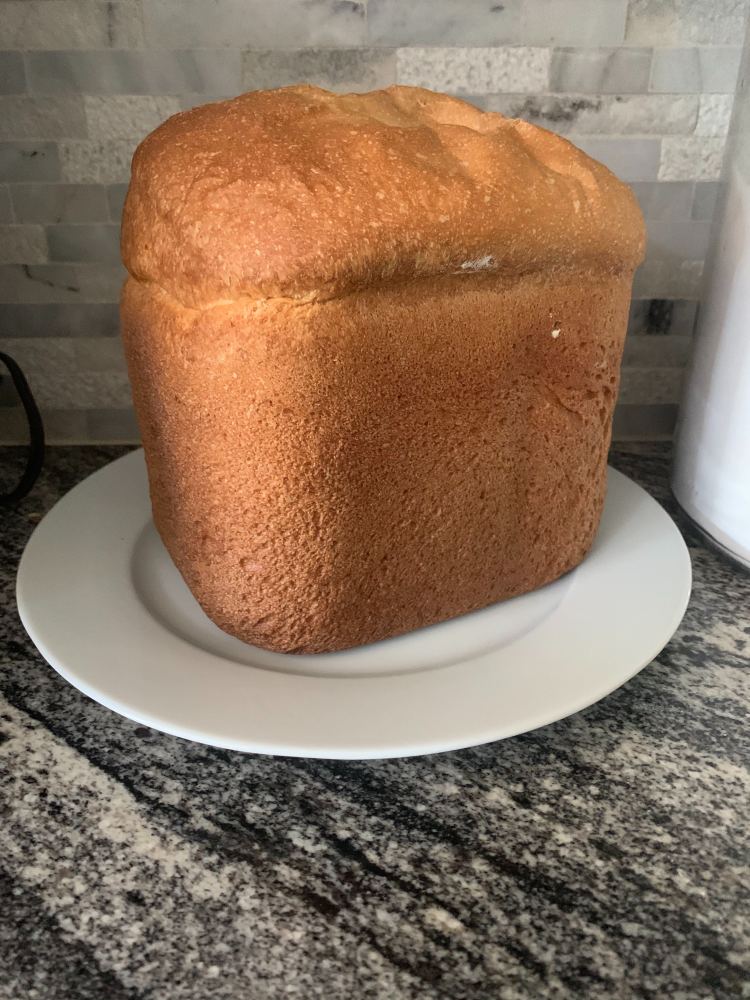
Once it is finished, I will empty it onto a plate to cool. USE OVEN MITTS (or, if you have a retriever that loves to chew oven mitts for some reason completely unbeknownst to me, use a thick kitchen towel). Below is your (hopeful) final result.

PS – If you have trouble, I do know things like humidity can mess with our bread. Post your problem below, and I will Google the heck out of it to try to help, if I don’t know. 🙂

PPS – Working on my first sourdough starter. Will update you on how that goes soon. May not be the next post, but will be pretty quickly behind it if not!

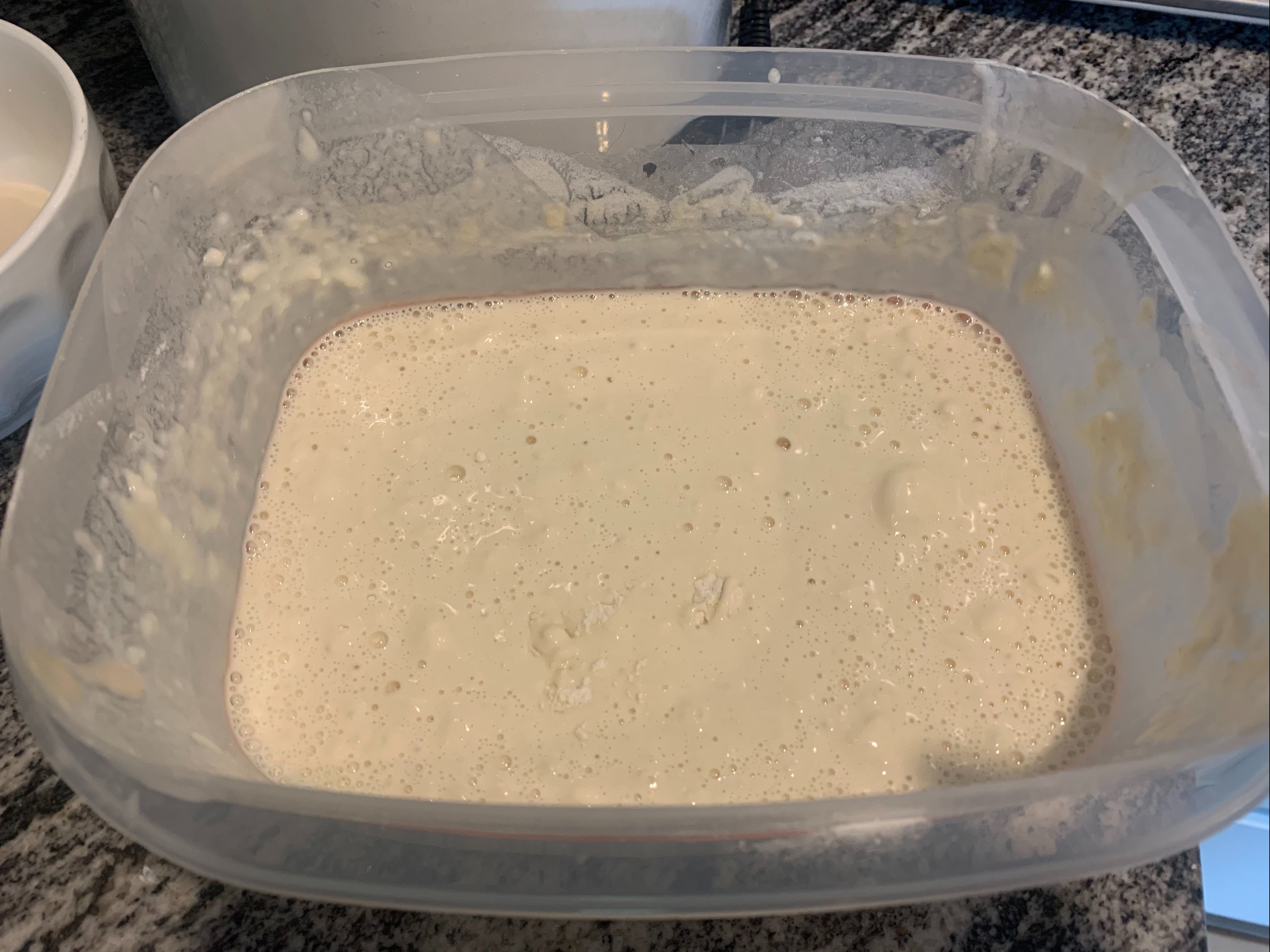
My baby sourdough starter. Today is day 4 or 5.

Hope y’all have fun, and let me know how it goes! If you find some yeast for sale online, let me know! I’m on the hunt!